Iranian Student Criticizes US-Iran Agreement Raises Concerns Over Human Rights and Regime Accountability
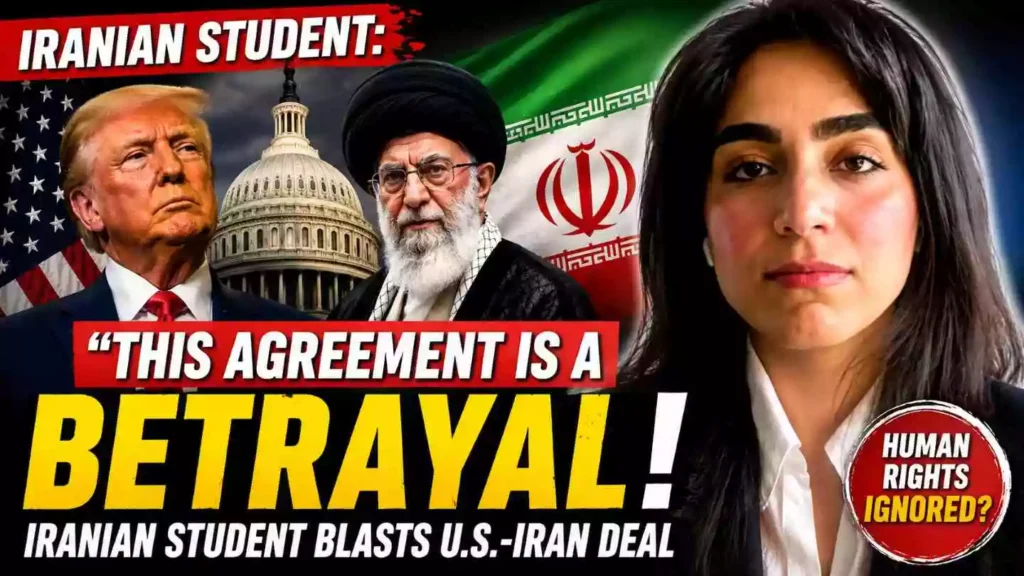
Iranian Student Criticizes US-Iran Agreement Raises Concerns Over Human Rights and Regime Accountability
Iranian-American Voices Concern Over New US-Iran Understanding
A new U.S.-Iran agreement has sparked debate among Iranian dissidents and members of the Iranian diaspora, with some arguing that renewed engagement with Tehran could undermine efforts to hold the country’s leadership accountable for alleged human rights abuses.
One of the most vocal critics is Sadaf Zareh, an Iranian student studying at the University of Connecticut who says she still has family living inside Iran. During a recent television interview, Zareh expressed deep skepticism about the reported agreement, arguing that previous diplomatic efforts with the Iranian government have failed to bring meaningful reforms.
According to Zareh, many Iranians both inside and outside the country view the deal as a step backward rather than progress.
Concerns About Human Rights in Iran
Human rights remain a central issue in discussions surrounding U.S.-Iran relations. Critics of the Iranian government point to allegations of political repression, restrictions on free speech, and crackdowns on anti-government protests.
Zareh argued that any agreement with Tehran should prioritize the rights and freedoms of the Iranian people. She cited reports of arrests, executions, and punishments imposed on individuals accused of challenging government authority.
“The concern is that financial or diplomatic concessions could strengthen the regime without improving conditions for ordinary citizens,” she said during the interview.
Supporters of a tougher stance toward Tehran have long argued that international pressure is necessary to encourage meaningful change, while advocates of diplomacy contend that engagement can reduce tensions and create opportunities for future reforms.
Debate Over Whether Diplomacy Can Change Tehran’s Behavior
The latest agreement has reignited a longstanding debate in Washington over how best to deal with Iran.
Supporters of diplomatic engagement argue that negotiations can help prevent conflict, reduce regional tensions, and limit nuclear proliferation. They maintain that dialogue remains an essential tool for addressing security concerns in the Middle East.
Critics, however, question whether the Iranian government will alter its policies in exchange for economic incentives or diplomatic recognition.
Zareh expressed doubt that previous attempts at engagement have produced lasting changes. She argued that expectations of moderation within Iran’s leadership have repeatedly failed to materialize, leading many opponents of the regime to question the effectiveness of renewed negotiations.
The Legacy of Maximum Pressure
During the interview, Zareh referenced former President Donald Trump’s Iran policy, particularly the 2020 U.S. strike that killed Iranian military commander Qassem Soleimani.
Many Iranian dissidents viewed the operation as a signal that the United States was willing to take a harder line against Tehran. Zareh argued that the move convinced many Iranians that Washington had abandoned what critics described as a policy of accommodation toward the regime.
She also claimed that Trump’s rhetoric during his first term resonated with segments of the Iranian population who hoped for greater international support in their pursuit of political change.
The issue remains politically sensitive, with opinions varying significantly among Iranian citizens, Iranian-Americans, and policymakers in both Washington and Tehran.
A Divided Response to the Agreement
Reaction to the reported agreement has been mixed. Some analysts see diplomacy as a practical way to avoid military escalation and maintain regional stability. Others fear that any deal lacking strict accountability measures could embolden the Iranian government.
The broader question facing policymakers is whether engagement can achieve both security objectives and improvements in human rights conditions.
For many Iranian activists and dissidents, that question remains unresolved.
Looking Ahead
As details of the U.S.-Iran agreement continue to emerge, scrutiny from lawmakers, foreign policy experts, and human rights advocates is expected to intensify.
The debate highlights the difficult balance between pursuing diplomatic solutions and addressing concerns about political freedoms, civil rights, and government accountability.
For critics like Sadaf Zareh, the ultimate measure of success will not be the signing of an agreement, but whether the lives of ordinary Iranians improve as a result.
With tensions across the Middle East continuing to shape global politics, the future of U.S.-Iran relations is likely to remain a major topic of international discussion in the months ahead.
#Iran #USIranRelations #IranNuclearDeal #MiddleEastNews #HumanRights #IranProtests #ForeignPolicy #Geopolitics #SadafZareh #BreakingNews