America’s Critical Minerals Push Gains Powerful New Ally in Race Against China’s Tungsten Dominance
America’s Critical Minerals Push Gains Powerful New Ally in Race Against China’s Tungsten Dominance
US Moves to Secure Critical Mineral Supply Chain as China Tightens Grip
The United States is accelerating efforts to reduce its dependence on China for critical minerals, and a major new partnership in Kazakhstan could become a game-changer in the global race for strategic resources. As concerns over national security, defense manufacturing, and supply chain resilience continue to grow, American-backed investments in tungsten production are emerging as a top priority.
China currently controls more than 80 percent of the world’s tungsten supply chain, creating significant vulnerabilities for the United States and its allies. With Beijing imposing tighter export controls and increasing stockpiling efforts, U.S. companies and policymakers are searching for alternative sources to secure this vital mineral.
Why Tungsten Is Critical to National Security
Tungsten is one of the most important strategic minerals in the world. Known for its extreme hardness, heat resistance, and durability, the metal is essential for military applications, including munitions, artillery systems, armor-piercing ammunition, and advanced weapons technologies.
The U.S. military relies heavily on tungsten for defense manufacturing, yet domestic production has been virtually nonexistent since 2015. This dependency has become increasingly concerning as geopolitical tensions rise and global conflicts continue to place pressure on mineral supply chains.
Industry leaders warn that ongoing military operations and increased defense production requirements have significantly boosted demand for tungsten while global supplies remain constrained.
Kazakhstan Emerges as a Strategic Partner
A major breakthrough came when Kovy Kaz Capital finalized a deal to acquire majority ownership in a large tungsten joint venture in Kazakhstan. The project is being hailed as one of the most significant critical mineral developments in recent years.
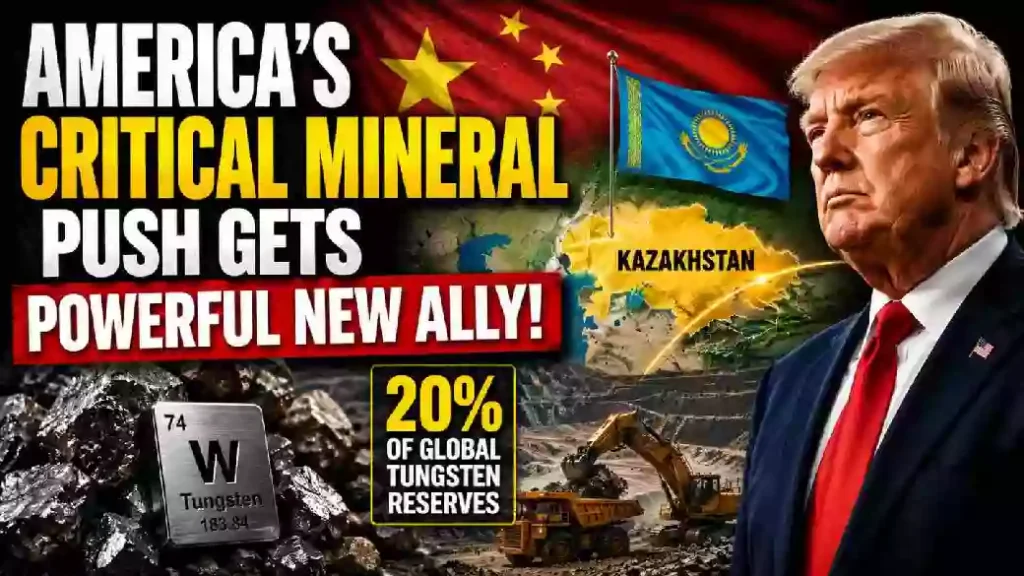
According to company executives, the Kazakhstan asset contains approximately 20 percent of the world’s known tungsten reserves, making it one of the largest deposits ever identified. If fully developed, the project could potentially provide the United States and its allies with a reliable source of tungsten for more than five decades.
Kazakhstan has increasingly become an attractive destination for Western investment due to reforms in its mining regulations, business environment, and openness to foreign partnerships. The country’s vast natural resource wealth positions it as a strategic alternative to Chinese-controlled supply chains.
Massive Investment Planned for Tungsten Production
Developing the Kazakhstan project will require substantial financial resources. Kovy Kaz Capital has already invested tens of millions of dollars into mineral development efforts and has committed approximately $1.1 billion toward the tungsten operation.
In addition to private capital, the project has reportedly received support through letters of intent totaling approximately $1.6 billion from U.S.-linked financing institutions, including export and development agencies. This backing is expected to accelerate construction and move production online more quickly.
Industry observers believe the project’s strong economics make it one of the few large-scale mining developments capable of proceeding without extensive government subsidies.
America’s Broader Critical Mineral Strategy
The tungsten initiative is part of a broader effort by the United States to rebuild critical mineral supply chains. In recent years, policymakers have increasingly recognized the risks associated with relying on foreign adversaries for materials essential to defense, technology, and manufacturing.
Critical minerals such as tungsten, rare earth elements, lithium, antimony, copper, and beryllium play vital roles in modern industries. These resources are needed for everything from military hardware and semiconductors to electric vehicles and renewable energy technologies.
Many industry leaders are now calling for expanded domestic production while simultaneously securing reliable imports from allied nations. Experts argue that a combination of domestic mining, international partnerships, and supply chain diversification is necessary to ensure long-term security.
Reducing Dependence on China
China’s dominance over critical mineral markets has been built over decades through strategic investments, processing capacity, and government support. As a result, many Western countries have become heavily dependent on Chinese exports.
Recent export restrictions have highlighted the risks associated with this dependence. Analysts warn that supply disruptions could impact military readiness, industrial production, and economic competitiveness.
Projects like the Kazakhstan tungsten venture represent a strategic effort to reduce those vulnerabilities. By developing alternative supply sources and strengthening relationships with resource-rich nations, the United States hopes to create a more resilient and secure mineral supply network.
The Future of Critical Minerals
As demand for strategic minerals continues to grow, competition between global powers is expected to intensify. The United States is increasingly viewing critical minerals as both an economic and national security priority.
The Kazakhstan partnership could mark a significant milestone in America’s effort to secure long-term access to tungsten and other essential resources. With substantial investments underway and government support growing, the project demonstrates how public-private cooperation can help address some of the most pressing supply chain challenges facing the nation.
As global demand rises and geopolitical competition expands, securing reliable access to critical minerals may become one of the defining economic and security issues of the decade.
#CriticalMinerals #Tungsten #China #NationalSecurity #MiningIndustry #RareEarths #SupplyChain #DefenseIndustry #StrategicMetals #Kazakhstan